Cat litter from olive pitsIt is a 100% natural, biodegradable and clumping cat litter obtained by washing, drying, grinding and enriching the olive pits left over from olive oil production with activated carbon. Unlike mined bentonite, it is produced from an agricultural byproduct; In this way, it is lighter, creates significantly less dust, and thanks to activated carbon, it physically traps the ammonia odor instead of covering it with chemical perfume.
The most difficult issue for cat owners is to ensure that the cat accepts the litter while preventing the house from smelling. As the options on the market increase,Which cat litter is better?“, “Which is the best natural cat litter?" or "Dust-free cat litter recommendedQuestions like " have also increased. In this guide, we discuss all aspects of olive pit cat litter - from production to performance, from safety to cost.
What is olive pit cat litter?
Olive pit cat litter is a plant-based cat litter produced from the hard inner core of the olive. The seed pieces in the pomace (olive pulp) resulting from olive oil squeezing are separated, cleaned of oil residue, dried at high temperature and ground to certain grain sizes. The resulting granular structure is porous in nature; That is, it absorbs the liquid instead of holding it on its surface.
The main factor that distinguishes the product from ordinary vegetal sand is this natural porosity. activated carbon is supported by. Activated carbon adsorbs odor molecules with a surface area reaching hundreds of square meters per gram — that is, it does not cover it with perfume, but retains it. Activated carbon cat litter This is why people looking for products turn to olive pit-based products.
What's not in it?
Olive pit cat litter does not contain clay, silica, synthetic flocculants, colorants or artificial perfumes. This distinction is decisive for cats with respiratory sensitivities and people with allergies at home. Cat litter for allergic cats This is usually the first criterion that searchers look at: pureness and dustlessness.
Terminology note: In the market, the expressions "olive cat litter", "olive pit cat litter" and "olive pit cat litter" describe the same product group. “Organic cat litter” and “eco-friendly cat litter” is a broader category; In our natural and organic cat litter guide We compared this entire group.
How is olive pit cat litter produced?
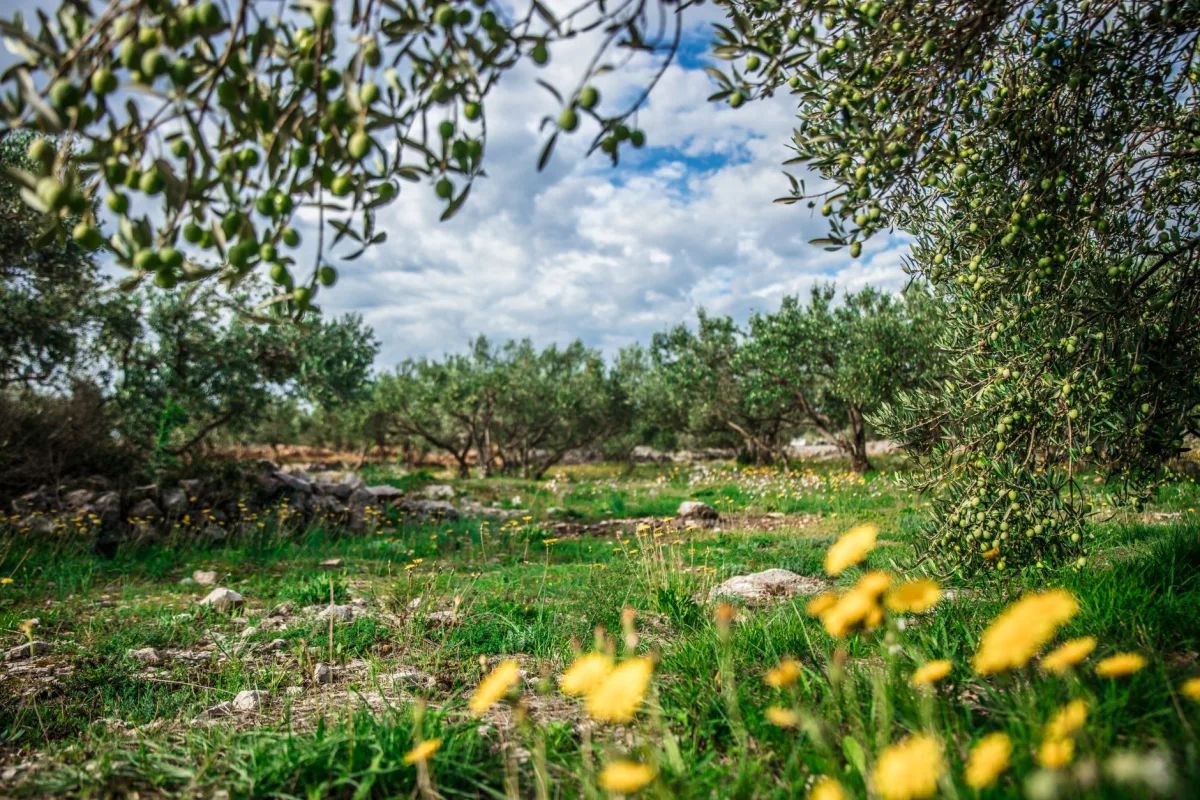
The production process is a typical example of a circular economy, transforming the waste of the food industry into a valuable consumer product. Türkiye, International Olive Oil Council According to data, it is one of the world's leading olive producers; Therefore, the raw material source is local and permanent. Stages In our detailed production article Let's summarize it here.
- Separation of raw materialThe pomace from olive oil factories is sifted; The core and flesh are separated from each other. Only the hard core fraction is used for cat litter.
- Washing and degreasingThe oil residue on the core surface is cleaned. If this step is skipped, the sand will smell and its clumping performance will decrease.
- DryingIt is dried until the moisture content drops to a very low level. Humidity, as well of mold It is also the main cause of loss of absorbency; Drying quality directly determines product life.
- Grinding and siftingDried beans are ground and sieved to homogeneous granule size. Grain sizeIt affects everything from the cat's acceptance of the litter to its clumping power.
- Enrichment with activated carbonActivated carbon is added to the granules. This is where the characteristic dark mottled appearance of the sand comes from and this stage determines much of the scent performance.
- PackagingIt is packaged to prevent moisture. Recycling the packaging in a separate article We have covered.
Highlights
High absorbency and fast liquid retention
The porous structure draws the liquid into the granule. This prevents pooling at the bottom of the litter box and the spread of wet areas, which are the source of the odor. In this way, the formation of hard layers sticking to the bottom of the container is reduced - this is one of the issues that bentonite users complain about the most. Absorbency in units of measurement In our absorbency article We examined.
Odor control with activated carbon
When the urea in cat urine is broken down by bacteria, ammonia is released; This is the main source of that pungent smell in the house. How to avoid cat litter odor The technical answer to the question is to capture ammonia before it mixes with the air. Activated carbon binds these volatile compounds to its surface. For details of the mechanism Our odor control article And How does activated carbon work? You can look at our guide.
Dust-free structure — important for breathing
Fine particles released into the air during pouring and digging in clay-based litters can irritate the respiratory tract of both the cat and the owner. Cornell Feline Health Centerhighlights the role of environmental triggers in asthma and lower respiratory tract diseases in cats. Since olive pit granules are larger and heavier, the amount of dust suspended in the air is significantly lower. Detail: Is it dust free? And cat litter dust and respiratory risk.
Lightness
It is noticeably lighter than the same volume of bentonite sand. It is a practical advantage that can be felt in daily use, from grocery shopping to carrying the litter box, from taking the bag upstairs to emptying the container. physical reason In our weight article We explained.
Biodegradability and environmental impact
Since it is of plant origin, it decomposes in nature. Biodegradable cat litter And eco-friendly cat litter One of the strongest arguments for seekers is that the product is produced from already existing agricultural waste — meaning no new resources are consumed. This point of view In our sustainable cat litter guide, the cost of the mining alternative is environmental cost of bentonite mining We discussed it in our article.
Clue: If you are thinking of using used sand in your garden, first our compost article read on — sand containing feces should not be used in the vegetable garden.
Comparison with other types of cat litter
The table below compares the behavior of common litter types in daily use. For a detailed breakdown of all eight species to our comparison table you can look.
| Feature | Olive pit | Bentonite | Crystal (silica) | Pine pellets |
|---|---|---|---|---|
| Source | Agricultural byproduct | Mining (clay) | Synthetic | Wood byproduct |
| Dust level | Low | High | Low | Too low |
| Odor control | High with activated carbon | Medium–high | High | Natural resin scent |
| Weight | Light | Heavy | Light | Middle |
| Clumping | Yes | Yes (very strong) | No | No (disperses) |
| Biodegradable | Yes | No | No | Yes |
| Feel under paws | Soft-medium | Soft | Hard/sharp | Hard |
| Environmental load | Low | High | High | Low |
Values reflect typical product behavior; It may vary from brand to brand.
We have detailed articles for the two most frequently compared scenarios: olive pit or bentonite? And olive pits or pine pellets?. For evaluation of bentonite on its own bentonite cat litter article, for the safety of silica crystal cat litter review you can look.
Pros and cons
Pros
- Dust-free structure — respiratory friendly
- Powerful ammonia control with activated carbon
- Lighter than the same volume of bentonite
- 100% natural, without chemical additives
- Biodegradable and produced from agricultural by-product
- Hard layer adhesion to the bottom of the container is low
- Perfume-free — suitable for cats with scent sensitivities
Things to consider
- The price per kilogram may seem higher than bentonite
- Clumping is not as rock hard as bentonite
- If stored in a humid environment, its performance decreases
- The cat needs a period of acclimatization when changing the litter box.
- It is not recommended to pour it into the toilet.
Who is it suitable for?
- Cats with respiratory sensitivity: Dust content is the most critical criterion in cats with a history of asthma or bronchitis.
- Those with allergic individuals at home: It makes a difference that it does not contain perfume and clay powder. See Does cat litter cause allergies in people?.
- Multi-cat houses: Activated carbon provides a distinct advantage in environments where the odor load is multiplied. See Odor management in multi-cat homes.
- Kittens and older cats: The soft paw feel and dust-free structure are advantageous for both groups. See which litter for kittens And Choosing litter for older cats.
- Users with environmental concerns: Those who want to choose agricultural by-products instead of mining.
- Those who have difficulty carrying the litter box: Lightness makes daily care noticeably easier.
Warning: If your cat mouths or eats sand, consult a veterinarian, regardless of the type of litter. This behavior (pica) may be a sign of nutritional deficiency or an underlying health problem. Detail: eating cat litter (pica).
How to use? Step by step
Correct litter depth
Approx. 4-6cm A depth of litter is ideal for most cats. Too little litter weakens the clumping and prevents the cat from covering its feces; Too much sand increases scattering during digging and does not provide savings. Detail: How much sand to put in the litter box?.
Daily routine
Remove pellets and solid waste at least once a day, preferably twice in the morning and evening. Maintain the level by adding fresh sand in the amount taken. Daily cleaning routine We detailed this flow in our article.
Full change
Empty and wash the entire container at regular intervals depending on the intensity of use. This interval is longer in single-cat homes and shorter in multi-cat homes. See How often to change cat litter And disinfection of the container.
Container location
Choose a spot that is quiet, accessible, and away from the food and water bowl. In houses with many cats N+1 rule Valid: one more container than the number of cats. See How many litter boxes for how many cats? And placement guide.
Storage
Keep the opened package tightly closed in a dry and cool place. Moisture is the number one factor that reduces absorbency and odor performance. See How to store cat litter.
How do you get your cat used to new litter?
“My cat doesn't like the litterMost of the time, the reason behind the complaint is not the product itself, but the sudden transition. International Cat Careemphasizes that cats are sensitive to changes in the litter box environment and sudden changes can lead to bowl rejection.
An easy-to-implement gradual transition scheme:
| Day | Old litter | New litter |
|---|---|---|
| 1–2 | %75 | %25 |
| 3–4 | %50 | %50 |
| 5–6 | %25 | %75 |
| 7 | — | %100 |
If the cat hesitates during this process, take a step back and stay at that rate for a few more days. For the full plan and troubleshooting steps Our 7-day training plan, if the cat rejects the bowl completely won't use the litter box See our article.
7 common mistakes
- Making a sudden transition. The number one reason why a cat rejects the bowl. See rebranding guide.
- Overfilling the container. Increases scatter, does not save money. See scatter solutions.
- Putting the container in the wrong place. Noisy, cramped areas or areas close to the food will deter the cat.
- Trying to cover up the smell with chemicals. Sprays and perfumes can bother cats. See Are deodorizers safe? And pouring baking soda into cat litter.
- Rarely wash the litter box. Even if the sand is renewed, the plastic container itself retains odor over time.
- Storing sand in a humid environment. The bathroom or balcony shelf is the classic mistake that reduces performance.
- Trying to manage with one pot. The most common cause of toilet problems in multi-cat homes. See Stress and toilet problems in cats.
Cost: is it really expensive?
Olive pit cat litter prices The most common mistake when evaluating is to look at the price per kilogram. Correct unit of comparison how many days used, that is, the daily cost. Since olive pit sand is lighter than bentonite, it gives more volume with the same weight; Additionally, thanks to its absorbency, it may require full renewal less frequently.
If you want to make calculations for your own use cost per liter calculation And how long will it last Our articles contain practical formulas. Whether bulk purchasing makes sense? in this article we discussed.
Cat litter with activated carbon from olive pits
Try the 100% natural and biodegradable HK Cat Litter cat litter, produced from the by-product of Ayvalık olive cultivation.
single 8 L natural cat litter 8 L x 4 advantageous cat litter pack All cat litter types
Frequently asked questions
Does olive pit cat litter clump?
Yes. Granules in contact with the liquid cling to each other and form lumps that can be scooped out. Its clumping behavior is not as hard as that of bentonite, but it is more than sufficient for daily cleaning. Detail: agglomeration performance.
Is it harmful for cats?
It is a natural, chemical-free and perfume-free product. However, if your cat shows a habit of eating litter — no matter what litter it is — a veterinarian should be consulted. See security guide.
Can it be poured into the toilet?
No, it is not recommended. Just because it's biodegradable doesn't mean it can be flushed down the toilet; Granules may accumulate in the installation and cause blockage, and they are also not suitable for wastewater infrastructure. Reasons: Does it pour into the toilet?.
How much sand is 8 liters enough?
Normal use in a single-cat household corresponds to a period of several weeks. The number of cats depends on the size of the container and your cleaning habits. Calculation method: How many kg is 8 liters, how many days is it enough?.
Does it create dust?
It creates significantly less dust than clay-based sands. Since the granules are large and heavy, the amount of particles suspended in the air during pouring is low. To compare: Is it dust free?.
Does it have a smell?
It does not contain artificial perfume. It has a light, natural herbal scent and retains the smell of ammonia thanks to activated carbon. Perfumed litters can be irritating to cats; this choice scented or odorless? We discussed it in our article.
Can it be used on kittens?
Yes. Its dust-free structure and soft paw feeling are advantageous for kittens. Just keep an eye out for the first few weeks as kittens tend to mouth the sand. See which litter for kittens.
Is it more expensive than bentonite?
The difference can be seen when looking at the price per kilogram; However, since olive stone sand is lighter, the same weight gives more volume. The correct comparison is on unit (litre or day) cost. See what determines the price.
Conclusion
Activated carbon cat litter produced from olive pits; Since it combines dust-free structure, lightness, strong odor control and biodegradability in a single product, it is a balanced option in terms of both the comfort of the cat and the hygiene of the house. The main factor that makes it stand out from an environmental perspective is the use of an existing agricultural by-product instead of mining.
If you are wondering the story behind the product From Ayvalık olive cultivation to cat litter You can read our article and take a look at our compilation of user reviews for real user experiences.
Related articles
Tags for this post

The team that produces sand in our production facility in Ayvalık turns the most frequently asked questions in the field into a guide. Health-related sections are general information; It is not a substitute for a veterinary examination.